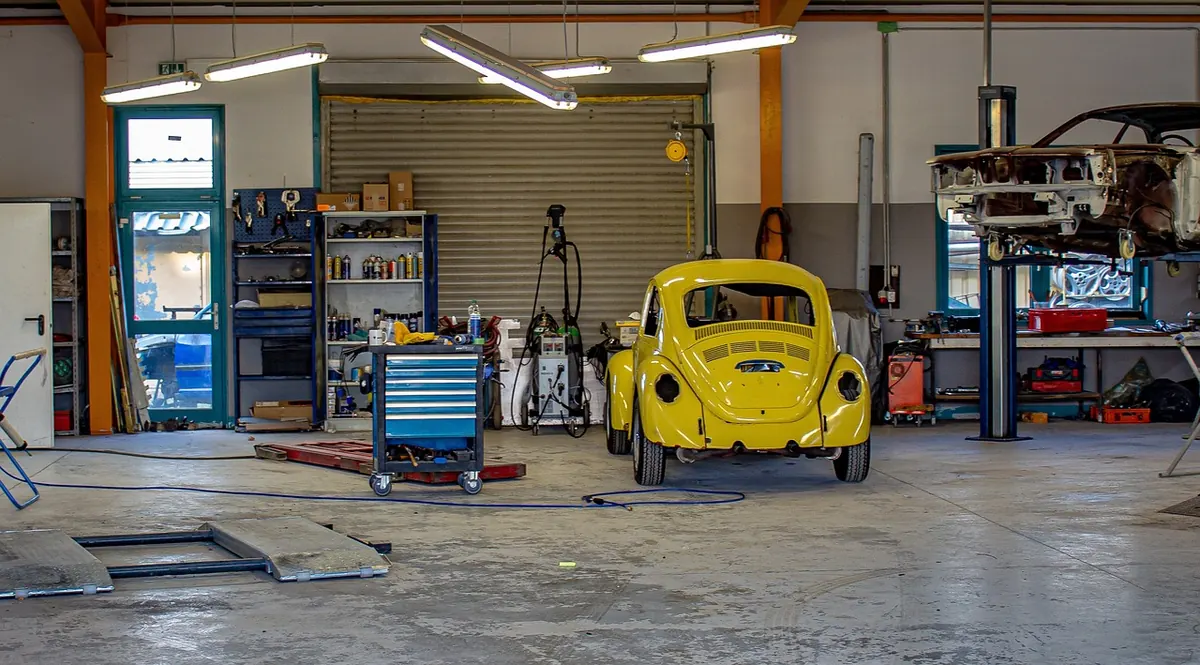
By late October the salt is already drying on windscreens along the Dorset coast, and the first heavy dew has started finding its way past the gaps in a wooden garage door. A classic that sits unused from November to March gets quietly tested by everything Wessex weather can throw at it: Atlantic damp, mild spells that fool you into thinking winter is over, and cold nights that leave condensation on bare steel.
Use and warmth keep a car dry. Storage does the opposite. What follows is an order of work that suits a garage, a carport or a sealed cover on a driveway — the jobs worth doing before you shut the door, and the checks worth making while it stays shut.
Our winters rarely deliver hard, dry frosts. They deliver damp air, driven rain and salt-laden wind, and that combination is harder on metal than a colder, drier climate would be. Unheated garages built into old stone or brick tend to be the worst offenders, because the walls hold moisture and release it slowly into the air.
Where that moisture lands, trouble follows: surface rust blooms on brake discs, pitting on chrome, mould on headlining and seats, corrosion creeping along sill seams and battery trays. Fuel left standing for months can go stale, and modern petrol blended with ethanol absorbs water rather than shedding it. None of this happens quickly. It happens invisibly, which is why the preparation matters more than the storage itself.
Never store a dirty car. Road film and mud hold moisture against paint, and Wiltshire chalk lanes and New Forest lanes leave a fine grit that works into seams and arches. Pick a dry, breezy day and work through the car properly.
If an oil change is due, do it before storage rather than after. Used oil carries acids and moisture; fresh oil does not. Top up coolant with the correct mix and check the concentration with a tester, so you are covered if the garage does drop below freezing.
Think of the garage as a box that needs managing rather than sealing. A car under a plastic sheet in a damp garage will rust faster than one left uncovered, because the sheet traps condensation against the panels. If you use a cover outdoors, choose a breathable, multi-layer one and fit it over a clean, dry car.
An unused battery discharges on its own, and an alarm, clock or tracker speeds that up. Either remove the battery and store it in a cool, dry, frost-free place, or leave it in the car connected to a smart maintainer. A modern maintenance charger looks after the battery and shuts off when it is full; an old-style trickle charger left on for months can overcharge and cook it. Match the charger to the battery type — conventional lead-acid, AGM and gel all want different settings.
If you take the battery out, label it, keep the terminals protected and check the voltage every few weeks. If you leave it in, make sure the charger lead cannot be tripped over or caught in the bonnet.
Fill the tank before you put the car away. A full tank leaves less bare metal inside for condensation to form on, and adding a fuel stabiliser before the last run helps if the car will stand for several months. Run the engine afterwards so treated fuel reaches the carburettor or injection system.
Tyres flat-spot when a car sits loaded in one position for months. Overinflate them slightly, or take the weight off with axle stands under proper chassis points — and be careful with suspension that hangs at full droop. If the car stays on its wheels, roll it a few inches every few weeks.
Leave the handbrake off and chock the wheels instead; brake shoes and pads can stick to drums and discs over a damp winter. Leave the gearbox in neutral, and do not leave the clutch pedal depressed. On a convertible, leave the hood up and latched but do not force it tight.
Ring your insurer before the car comes off the road. Tell them it is being stored, ask whether your policy has any laid-up terms, and confirm that fire and theft cover continues while it sits. Check whether the policy requires the car to be taxed or MOT'd, whether there is a mileage limit, and whether your agreed valuation needs updating photographs or a condition report. If you are unsure how any of this applies to your car, speak to your broker and, where relevant, to the DVLA.
If the car is untaxed and kept off the public road, a Statutory Off Road Notification is usually required — but the rules and exemptions change, so confirm the current position for your vehicle rather than relying on what someone told you at a show. Make a note in the diary: policy renewal date, MOT date if applicable, and the date you last checked the car.
A stored car should not be abandoned. Once a month, open the garage, look for damp patches, check the hygrometer and battery, look for mouse droppings or chewed wiring, and roll the car a few inches. Traps and peppermint oil help; old carpet and blankets left in the boot simply give rodents somewhere to nest.
Resist the temptation to start the engine for two minutes. That brief run heats nothing properly and adds condensation to the exhaust and oil. Either take the car out for a proper run to full temperature on a dry, salt-free day, or leave it alone.
When the salt has gone from the roads, take your time. Check the tyre pressures and look for cracks or flat spots. Reconnect or refit the battery, check the oil and coolant levels, and look underneath for fresh leaks. Pump the brakes gently before you move, and expect the first few miles to feel stiff while the fuel reaches the engine and the brakes clean themselves up.
Then wash the car, take it for a decent run, and note anything that needs attention over the coming weeks. A classic that has been prepared and checked through the winter will reward you with a much shorter list of problems in April — and a far better chance of being ready for the first good weekend of the year.
Photo: kampfmonchichi / Pixabay