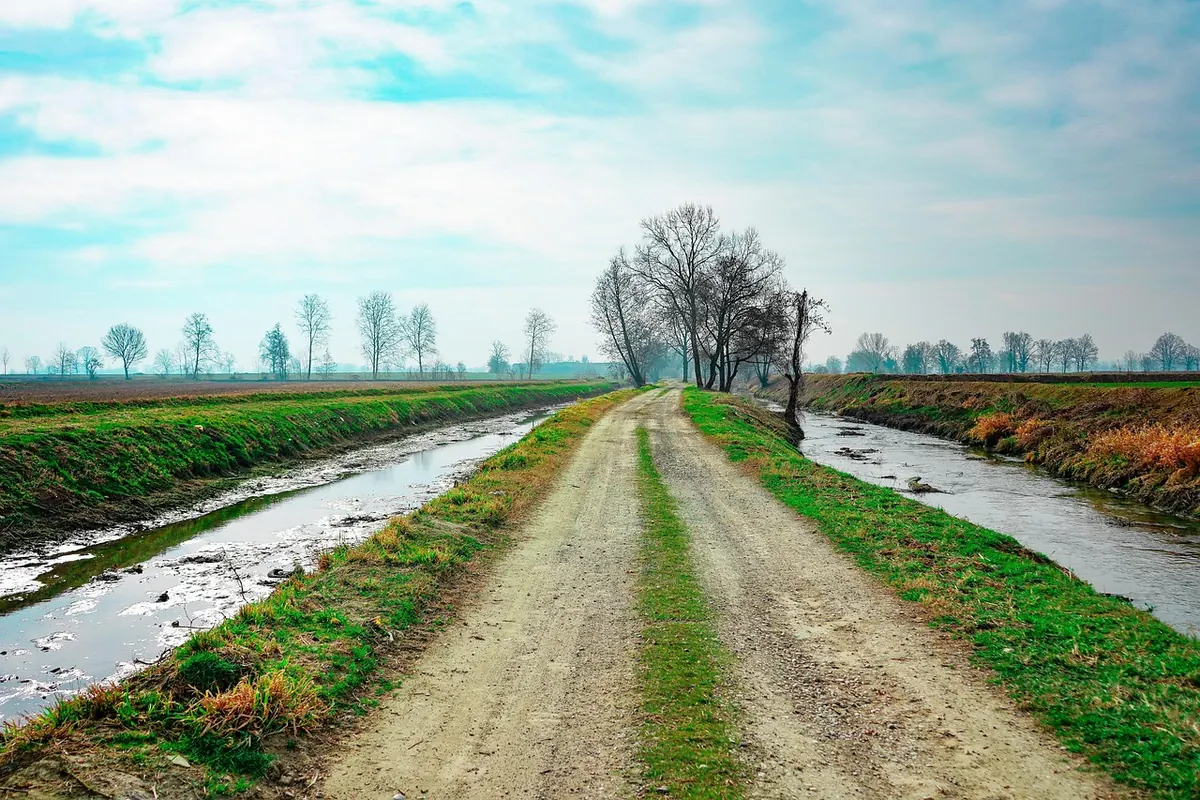
There is a particular kind of Wiltshire lane — the sort that winds between banks of cow parsley and old hazel from one chalk village to the next — that will expose a driver's habits within half a mile. You can usually tell who drives these roads daily and who has been sent down one by a satnav. The difference is not speed or confidence. It is a series of small, half-second decisions: when to ease off, where to pull in, how to read a wet patch of chalk. Most of it is never taught after the driving test. Below are the mistakes that show up most often between Marlborough and Warminster, and the techniques that fix them.
The national speed limit applies on most of these lanes, and it is not a target. Between two hedges you might be able to see forty metres of tarmac; at fifty miles an hour you need far more than that to stop. The useful rule is simple: drive at a speed that lets you stop within the distance you can actually see. If you can see thirty metres, your speed should suit thirty metres.
The second half of the mistake is failing to look far enough ahead. Passing places, field gates and the slight bulge in a hedge where a track joins are all visible from a long way back if you are looking for them. Scan the tops of the hedges too — a tractor's exhaust stack, a horse's ears or a cyclist's helmet will show above the greenery before the vehicle itself appears. If someone is sitting close behind you, ease off a little and let them fall back. Two cars nose to tail on a lane with no room to pass is a problem waiting to happen.
Passing places are not laybys, and the etiquette around them is worth learning properly.
A brief raised hand as you pass costs nothing and makes the whole business pleasanter.
Farm traffic leaves the lane in a worse state than it found it, particularly between October and March. Mud dragged out of a field gate, slurry from a dairy herd, wet leaves in a hollow and rain on bare chalk are all genuinely slippery — chalk in the wet behaves more like polished stone than gravel.
Deal with it before you reach it. Brake and change gear while the tyres are still on clean tarmac, then keep a steady throttle and straight steering across the mess. Sudden braking or a quick correction of the wheel is what puts cars into hedges. Treat every brown streak across the lane as if it were ice, and be especially careful where mud sits on a bend or in shade, because it stays wet there long after the rest of the road has dried. Four-wheel drive helps you move; it does not help you stop.
Sheep have no road sense and no interest in acquiring any. Slow to a crawl, stop if the flock is crossing, and let them drift past without engine noise, horn or revving. If a sheep panics and runs ahead of you, follow at walking pace until it finds a gap in the hedge. Lambs separated from their mothers will bolt in any direction, including yours.
Horses need more room than most drivers give them. Slow right down early, leave at least a car's width if the lane allows, and pass at a steady, quiet speed rather than creeping past with the engine labouring. Watch the rider: a raised hand or a wave-down means hold back, often because the horse is young or something further along the lane has spooked it. Riders, cyclists and walkers are all entitled to be there, and a couple of seconds of patience is cheaper than an argument or a claim.
Loose stock and open gates are common around common land and downland farms. If cattle are in the lane, give them time and space, and shut any gate you find closed behind you.
Wiltshire's sunken lanes hide their shape until you are in them. Read the road as far as you can: the line of the hedge, a telegraph pole, the tops of trees, a distant chimney all tell you where the tarmac goes. A faint glow of headlight or a flash of windscreen in the gap ahead means something is coming — lift off and move left.
Low sun is the quiet hazard. At dawn and dusk it comes straight down an east–west lane, and a dirty windscreen turns it into a wall of glare that hides ruts, puddles and pedestrians. Keep the screen clean inside and out, keep sunglasses in the car, and if you genuinely cannot see, slow to a speed from which you could stop in the distance you can make out.
"Unsuitable for motors", "no through road" and "weak bridge" are not suggestions. Plenty of lanes around the Pewsey Vale and the Wylye Valley look like shortcuts on a screen and end in a farmyard, a ford or a track that will take the paint off your sills. Damaged verges and deep wheel ruts are the usual evidence of someone who found out the hard way.
Glance at the signs at the junction before you turn, and keep a sense of where the main routes run — the A303, the A338, the A350, the A4 and the A36 — so you can head for one if a lane turns out to be more than you bargained for. Phone signal is patchy in the vale and on the edges of Salisbury Plain, so download a map for offline use rather than relying on live navigation. And allow a little more time than the estimate suggests; lanes take longer than maps admit.
None of this requires special equipment or skill, just a handful of habits:
Drive a Wiltshire lane at the speed the lane offers rather than the speed the map suggests, and you will arrive unrattled, with your sump, your verges and your temper all intact.
Photo: Paskvi / Pixabay