The first week with an electric car tends to go one of two ways. Owners who can charge at home settle into a routine within days and wonder what the fuss was about. Owners who can't spend those first days hunting for a working rapid charger at awkward times, usually late at night, usually in the rain. Most of what follows is about getting yourself into the first group — and knowing what to do across Hampshire, Dorset, Wiltshire and the Isle of Wight when you can't.
If you have off-street parking, this is where the overwhelming majority of your charging will happen. A dedicated 7kW wallbox will top up most family EVs overnight and adds roughly twenty to thirty miles of range for every hour it is plugged in. That covers the school run, the commute into Southampton or Basingstoke, and the Saturday tip run without a second thought.
Get quotes from installers registered for the government's chargepoint installer scheme, and pick one who has worked on your type of property before. An older house may need an earth rod, and your consumer unit has to be up to the job. Decide early whether you want a tethered cable or a socket, and think about cable routing while the electrician is still there rather than afterwards. Grant support for renters, flat owners and businesses has changed repeatedly over the years, so check the current position on GOV.UK before you commit, and let a qualified electrician make the call on what your supply can safely take.
No driveway? Then public and on-street charging becomes your home base, which changes what matters. Range and charging speed deserve more weight in your choice of car, and a slow kerbside unit near your parking spot is worth more than a rapid hub two miles away. A number of councils have been trialling lamp-post and kerbside chargepoints, and the picture differs from authority to authority, so check what your own council currently offers. Dragging a cable across a pavement is a trip hazard and is unlikely to be permitted, tempting as it looks.
Workplace charging is the quiet win of EV ownership. If your employer has installed points, a full working day plugged into a 7kW unit can add well over a hundred miles for nothing or very little. Ask your facilities team directly — there is often capacity nobody has claimed.
Destination charging matters more than it sounds. A 7kW point at a hotel, a pub in the Test Valley or a retail park in Poole will fill you up while you eat or sleep, at a fraction of the cost of a motorway rapid. Check the network app before you arrive: some points are for customers only, some are free for a set period, and some are simply broken.
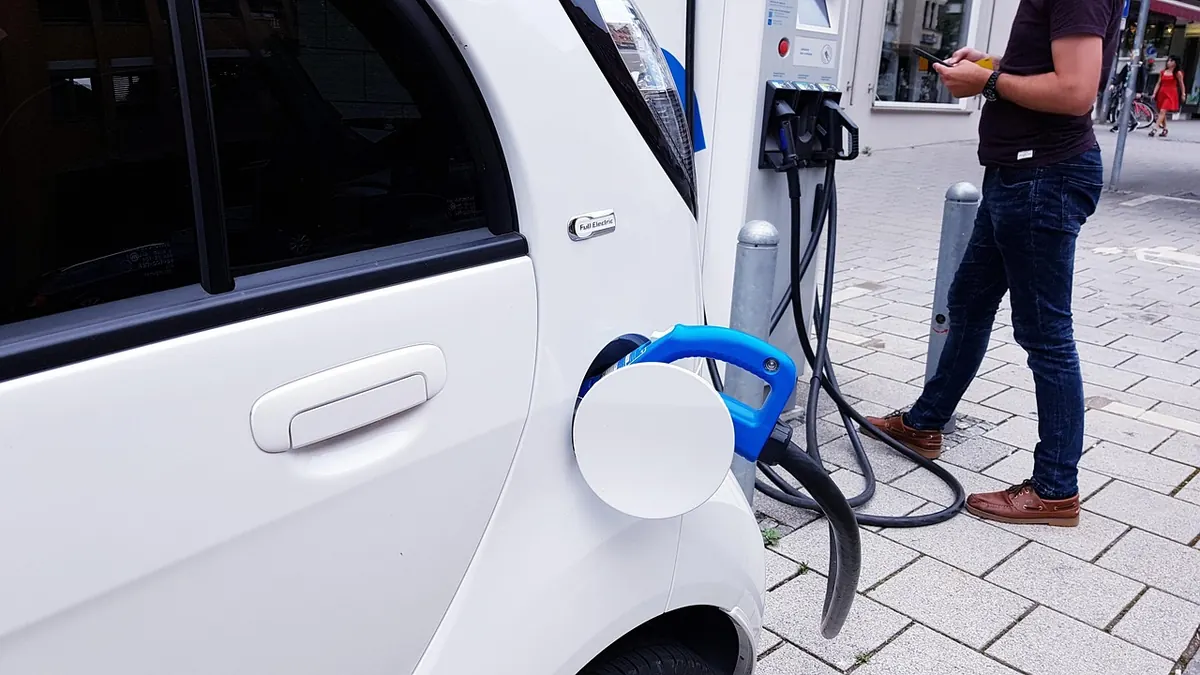
Broadly, public points come in three speeds. Slow units up to 7kW sit in car parks and on streets and suit long stays. Fast 22kW units are less common than they were. Rapids and ultra-rapids, from 50kW upwards, cluster at motorway services, retail parks and some filling stations, and are the ones you actually need on a long run.
In Wessex the motorway corridors are well served: the M3 around Fleet and Winchester, the M27 near Rownhams and Fareham, and the A303 corridor through Andover and Amesbury. The A31 and A35 through the New Forest and down to Bournemouth and Poole are improving all the time, and the A36 toward Bath has decent coverage. Venture deeper into rural Wiltshire or the Dorset downs, though, and the gaps widen quickly. Plan those trips before you leave, not at the roadside.
Check the connector type before you set off. Nearly all UK cars use a Type 2 socket for AC charging and CCS for DC rapid charging; a few older models still use CHAdeMO. Contactless card payment is now expected on newer rapid units, which saves a lot of app registration, though a pre-authorisation hold on your card is normal.
Home charging is almost always the cheapest way to fill up, and public rapid charging is the most expensive. Beyond that, prices vary by network, region and time of day, and they move constantly, so treat any figure you see as a snapshot rather than a rule. Some points are priced per kilowatt hour, some per minute, and many add a connection fee or an idle fee once your car has finished.
If you are weighing up an EV-specific tariff against your current one, that is a household energy decision as much as a motoring one — worth talking through with your supplier or an independent energy adviser.
Pre-conditioning the battery in winter, if your car offers it, makes a real difference to charging speed. If you are heading to the Isle of Wight, top up before boarding; the island's network is thinner once you get away from Newport, Ryde and Yarmouth.
Don't overthink it. Charge at home overnight, keep the car broadly between twenty and eighty per cent for everyday use, and do one deliberate public charging session in your first week so it isn't a mystery when you actually need it. Register with two or three networks you will realistically use, and keep a Type 2 cable in the boot.
Then get on with the driving. The A31 on a Sunday evening is still the A31 on a Sunday evening, electric or not.
Photo: stux / Pixabay